If you’ve ever visited Coniston, there’s a good chance you’ve heard the name Donald Campbell.
You may have even spotted the Bluebird Café overlooking the water or had a sip of Bluebird Bitter. But the story behind the boat — and the man who drove it — is one of the most fascinating pieces of Coniston’s history.
Donald Campbell was one of Britain’s great speed record breakers. Between 1955 and 1964, he broke the World Water Speed Record seven times, four of those records being set right here on Coniston Water.
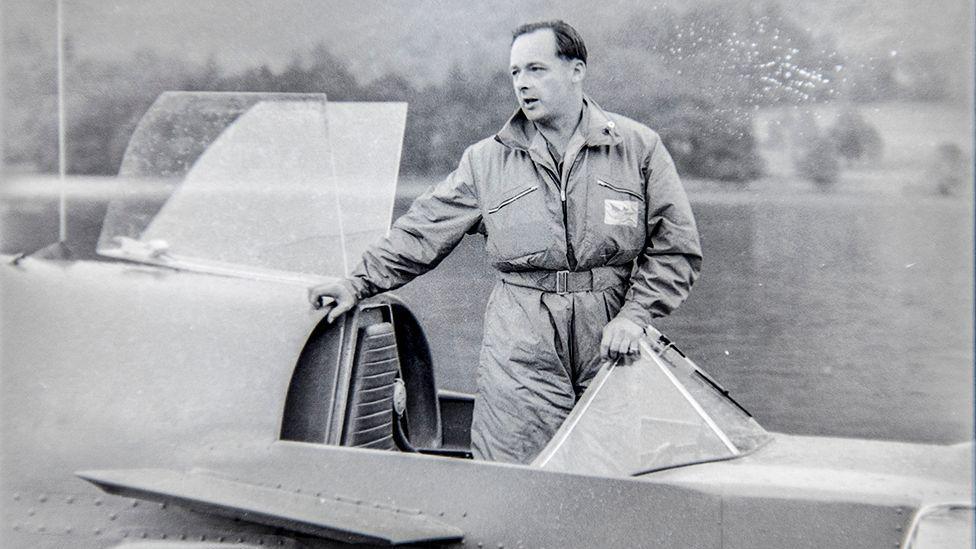
His jet-powered hydroplane, Bluebird K7, became synonymous with the lake. In 1959, Campbell reached 260.35 mph on Coniston Water, a speed that is difficult enough to comprehend… unless you are a Formula 1 fan like me.
Campbell wasn’t finished there. By 1967, he was back on Coniston with his sights set firmly on becoming the first person to break the 300 mph barrier on water.
On 4 January 1967, Bluebird completed its first run at an average of around 297 mph. Campbell needed a faster return run to achieve the record, and on the second run Bluebird reached more than 300 mph.
But just before the end of the measured kilometre, the boat became unstable, lifted from the water and somersaulted. Donald Campbell was killed instantly.
He was later awarded the Queen’s Commendation for Brave Conduct posthumously, recognising his “courage and determination” in attacking the world water-speed record.
And then there’s the slightly eerie part of the story.
The night before the fatal attempt, Campbell was playing cards with his engineers when he drew the Queen of Spades followed by the Ace of Spades. Which he recognised as the combination of cards supposedly drawn by Mary, Queen of Scots before her execution.
Campbell, who was known to be superstitious, reportedly told those around him that he knew someone in his family was going to “get the chop” and hoped it wouldn’t be him.
The following morning, he climbed into Bluebird.
It’s one of those stories where you really wish you could tell yourself it was simply folklore. But contemporary reports recorded the card game and Campbell’s reaction, making it a particularly chilling part of the story.
For 34 years, both Donald Campbell and Bluebird remained beneath the waters of Coniston. In 2001, the wreckage of K7 and Campbell’s body were recovered from the lake. He was eventually laid to rest in Coniston Cemetery, in the village that had become so closely connected with his life and achievements.
And then, more than half a century after that final run, Bluebird returned.
In May 2026, the Bluebird K7 Festival brought the restored hydroplane back onto Coniston Water for the first time since the 1967 crash. After years of painstaking restoration, she was once again running on the lake, with crowds gathering to watch.
Now, I know I was hoping for a record breaking speed display to recreate Donald Campbell’s 260-plus mph record runs but given the history I really can’t blame them! During the festival it reached speeds of up to around 150 mph. Compared with Campbell’s record-breaking runs, it might seem a little tame — but perhaps that’s missing the point.
This wasn’t about breaking records.
It was about bringing Bluebird home.
Today, you can see K7 in the purpose-built Bluebird Wing at the Ruskin Museum in Coniston, alongside an incredible collection telling the story of Donald Campbell’s life, his record attempts and the tragic final chapter. The exhibition includes memorabilia, photographs, interactive displays, the Land Rover used during his 1960 land-speed attempt and the Orpheus engine recovered from the lake.
If you want to make a proper Hidden Lakes day of it I would recommend starting out at the Bluebird Café and enjoy a coffee looking out on Coniston Water and then head over to the Ruskin Museum and spend some time learning about the life of Donald Campbell. You can then wander over to the cemetery to visit his grave and then finish off the day with dinner at the Crown or Yewdale Inn – their fish and chips are brilliant!
It’s a very different way of experiencing Coniston. You’re not just looking at the lake anymore; you’re following the story of the man who made it famous around the world.
And somewhere out there on the water, you can still imagine the roar of Bluebird.

Comments are closed