Most people know Beatrix Potter as the creator of Peter Rabbit. I know what you’re thinking… she’s famous, so why is this on Hidden Lake District!?
Well… what most people don’t know is how she helped shape the Lake District you see today.
Although she has blessed us with some of our favourite children’s books — the ones that were either read to us or we read to our kids — her involvement in the Lake District had an incredible effect that deserves just as much recognition as her writing.
Before she became known for her stories, Beatrix Potter was already deeply connected to the countryside. She spent much of her life in and around the Lake District, visiting on family holidays and later choosing to live here permanently. Over time, what began as admiration for the landscape turned into something much more committed. She didn’t just love the Lakes — she invested in them.
As her writing became successful, she gained financial independence at a time when that was rare for women. That independence gave her something even more powerful than fame: choice. And she chose the Lake District.
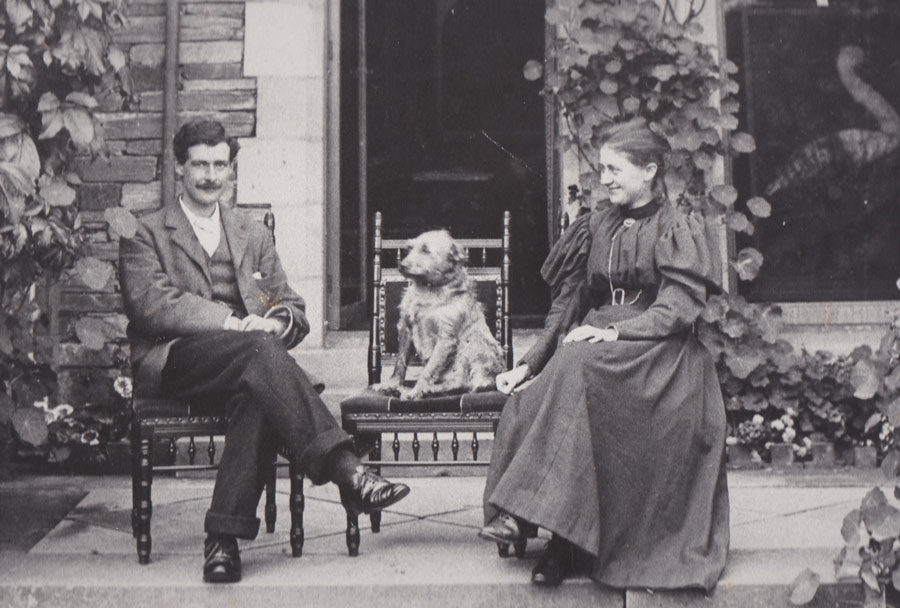
Rather than simply enjoying the scenery, she began buying farms and areas of land across the region. Not for development, but for preservation. She became increasingly involved in farming life too, learning about traditional rural practices and working closely with local farming families.
It was this combination — financial freedom, deep affection for the landscape, and a genuine understanding of rural life — that allowed her to do something quite remarkable.
She began purchasing land with a clear purpose: to protect it.
Much of this land was later left to what is now the National Trust after her death in 1943. In total, she left thousands of acres of farmland and numerous properties, helping to preserve large parts of the Lake District from development. It is no exaggeration to say that many of the views, footpaths and working farms people enjoy today exist because of those decisions.
One of the most important parts of her legacy is her work in protecting traditional farming, particularly the Herdwick sheep. These hardy sheep are perfectly suited to the Lake District fells, and Beatrix Potter became a passionate supporter of their continued breeding and survival. She didn’t see farming as separate from the landscape — she saw it as part of it.
That perspective is one of the reasons the Lake District still feels the way it does today. The patchwork of fields, stone walls and grazing sheep isn’t accidental. It is the result of generations of farming, yes — but also the result of people like Beatrix Potter recognising its value and choosing to protect it.
Standing in the Lake District now, it’s easy to take that for granted. The views feel timeless, as if they’ve always existed in exactly the form we see them. But the truth is more complex. Without her involvement, parts of this landscape could easily have been lost or changed beyond recognition.
There’s something quite striking about that when you really think about it.
A woman known for writing stories about a mischievous rabbit in a blue jacket also helped safeguard thousands of acres of real countryside for future generations. It’s a pairing that doesn’t immediately make sense, but somehow feels very fitting.
I find myself looking at the landscape a little differently knowing that. There’s a quiet kind of gratitude in it — not just for the beauty of the place itself, but for the people who made sure it would remain.
And I have to admit… I’ve got a new-found respect for her. Not just for Peter Rabbit, but for using her success to quietly help preserve one of the most beautiful places in the world for the rest of us to enjoy.

Comments are closed